

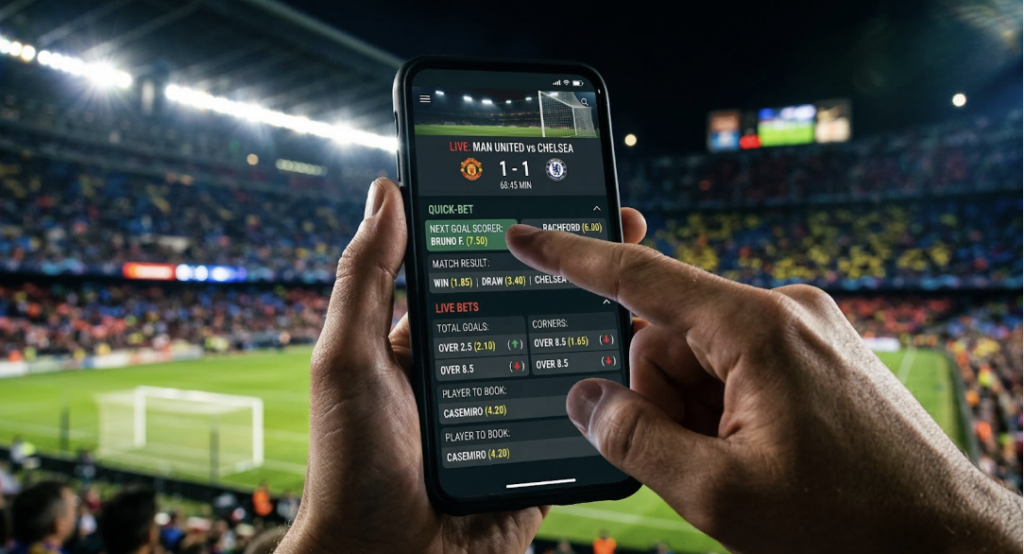
The sports wagering landscape has undergone a dramatic transformation over the past five years and continues to surpass record highs, but no innovation has captured user attention quite like micro-betting. Unlike traditional wagers placed before games begin, micro-betting allows participants to make decisions on specific moments within live sporting events. Like whether the next pitch will be a strike, if the upcoming drive will result in a first down, or which team will score the next point.
The appeal lies in psychological engagement rather than just potential returns. Traditional pre-game wagers create a single moment of tension, followed by hours of passive watching. Micro-betting transforms spectating into an active experience, where every play presents new decisions and immediate resolution.
The Technology Enabling Micro-Betting
Micro-betting became practical recently due to converging technological capabilities. Platforms must process thousands of simultaneous wagers, update odds in real-time, and settle bets within seconds. This requires low-latency data feeds, algorithmic pricing models, and efficient payment systems.
Sports data providers have accelerated their feeds dramatically. What once took 5-8 seconds from live action to data availability now happens in under one second. This speed matters because odds must reflect the current game state. Outdated information creates issues.
The complexity intensifies for sports where momentum shifts rapidly. Basketball micro-betting requires odds updates after every possession. Algorithms must account for lineup combinations, fatigue, timeout usage, and dozens of factors while recalculating odds multiple times per minute.
Esports as Micro-Betting Laboratory
The esports industry has become an unexpected testing ground for micro-betting innovation because digital games generate perfect data streams and offer natural micro-moments. Traditional sports require camera tracking and manual data entry. Esports titles like League of Legends, Dota 2, and Counter-Strike output structured data directly from game servers.
Platforms offering esports betting odds have pioneered micro-betting features that traditional sports are now adopting. This sportsbook’s esports markets enable users to wager on next-objective outcomes (which team takes the next dragon in League of Legends), next-round winners in CS2, or granular props, like next hero killed in Dota 2. The digital nature means zero latency between game events and data availability, allowing odds to update instantly, without the broadcast delay problems plaguing traditional sports.
What makes esports particularly instructive is the variety of micro-moment types within a single match – macro strategic outcomes (next tower destroyed), individual mechanical moments (will this AWP shot connect), or economic decisions (will a team force-buy or save). This diversity has taught operators which micro-bets generate sustained engagement, versus which feel too random. Lessons learned from esports micro-betting around odds velocity, proposition variety, and engagement pacing are now being applied to traditional sports markets.
User Behavior and Engagement Patterns
Micro-betting attracts demographically different users than traditional sports wagering, and session duration data also reveals interesting patterns. Traditional bettors might place 2-3 wagers on a Sunday of NFL games. Micro-betting users could average ten times as many individual wagers during a single NFL game, with intense engagement during action followed by brief cooldown periods. Total wagered amounts often remain similar, but they’re distributed across many small-stakes decisions, rather than a few large ones.
The psychological profile differs too. Micro-betting appeals to users who enjoy frequent decision-making and rapid resolution. They prefer continuous agency over outcomes, rather than making one judgment call and waiting hours. This aligns with broader entertainment consumption trends – users who prefer TikTok’s constant novelty over feature-length films tend to prefer micro-betting’s rapid-fire engagement over traditional game-long wagers.
Impact on Traditional Sports Broadcasting
Micro-betting has fundamentally altered how broadcasters approach live sports coverage. Networks now structure programming around micro-betting opportunities, highlighting key moments that translate into wagering decisions. Graphics packages display real-time probabilities alongside traditional statistics.
Major broadcasters have adapted their commentary styles to accommodate micro-betting audiences. Analysts now frame game situations in probabilistic terms – discussing likelihood percentages for next-play outcomes and situational conversion rates. This language would have seemed out of place a few years ago, but has become standard as micro-betting normalizes.
This creates a symbiotic relationship. Broadcasts drive awareness of micro-betting opportunities, while platforms benefit from engagement boosts that come with broadcast-synchronized markets. Some platforms now offer “watch and bet” features where users access micro-betting markets directly through streaming interfaces.
The Future of Micro-Betting
Augmented reality integration represents the next frontier. Imagine watching a football game through AR glasses that overlay real-time micro-betting odds directly on the field. See a quarterback drop back to pass, and potential wagers for completion, incompletion, or sack appear in your peripheral vision.
Algorithmic advances will enable increasingly granular propositions. Current technology supports relatively simple binary outcomes. Future systems might offer complex multi-leg micro-bets constructed in real-time, based on game state, allowing users to build custom propositions combining multiple upcoming micro-moments.
Micro-betting has fundamentally changed what sports wagering means for a substantial and growing segment of users. Rather than occasional activity centered on major events, it becomes a constant companion to sports viewing – a layer of interactive engagement overlaid on traditional spectating. The participation data suggests millions of users have enthusiastically embraced this more active relationship with live sports.