
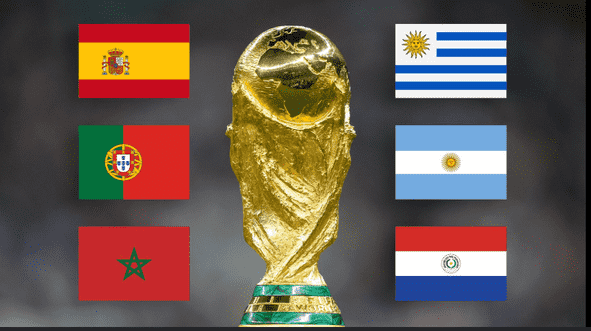
As the 2026 World Cup enters its quarter-final stage in North America, the ache of Nigeria’s absence grows sharper by the day. Nine of the ten African nations that qualified are still standing. DR Congo — the team that ended the Super Eagles’ dream on penalties in Rabat last November — are competing in the knockout rounds. South Africa, ranked 66th in the world, have made history by qualifying for the Round of 32. And Nigeria, one of the continent’s most gifted footballing nations, are watching from the outside for the second consecutive tournament. It is a situation that demands not sympathy but action. The 2030 World Cup — co-hosted by Spain, Portugal and Morocco — is four years away. The rebuilding starts now.
While Nigerian fans follow the remaining World Cup fixtures through the best betting sites in Nigeria — tracking the markets, backing the African teams still standing, and staying close to the game — the more important conversation is happening off the pitch: what does Nigeria need to change to ensure the Eagles are in Spain and Morocco in 2030?
The talent was never the problem
At the 2025 Africa Cup of Nations in Morocco, Ademola Lookman topped WhoScored’s player ratings with an almost implausible score of 8.81 — ahead of Mohamed Salah, Sadio Mané, and Riyad Mahrez. Victor Osimhen, one of the most coveted strikers in European football, ranked fourth overall. Wilfred Ndidi and Akor Adams were both in the top six. Nigeria had more players in the tournament’s MVP conversation than any other nation. And yet they missed the World Cup. The qualifying campaign is where the story unravels — three different coaches across a single qualifying series, home draws against Lesotho, Zimbabwe, and South Africa, and a players’ boycott of training two days before a playoff semi-final against Gabon over unpaid allowances. Nigeria lost to DR Congo 4-3 on penalties after a 1-1 draw. The talent was there. The structure was not.
The financial cost of failure
The consequences of non-qualification extend well beyond pride. Every nation participating in the expanded 48-team tournament was guaranteed at least $10.5 million in FIFA participation and preparation funds — nearly 87 percent of the NFF’s projected annual budget. Nigeria’s failure to qualify locked the federation out of those funds entirely. Add the lost sponsorship revenue, the reduced international visibility for Nigerian players, and the economic activity that World Cup participation generates through broadcasting and tourism, and the true cost of back-to-back absences runs into billions of naira. Former international Segun Odegbami has been blunt: “It’s not an Odegbami project, it’s a national call to save our football from the stranglehold of scavengers who have nothing to offer.” The frustration in those words reflects something deeper than a bad result. It reflects a football nation that knows it is underperforming relative to its potential.
What must change before 2030
The roadmap is not complicated. It is simply a matter of whether those in power have the will to implement it. First, the NFF must achieve basic financial accountability — players and coaches paid on time, in full, without protest actions or FIFA intervention. A federation that cannot organise payroll cannot claim to be running professional football. Second, the NFF must commit to a single head coach for the full 2030 qualifying cycle. Whether that is Eric Chelle — who showed real promise before inheriting a damaged campaign — or another appointment, the era of three coaches in one qualifying series must end definitively. A four-year mandate with clear objectives, proper funding, and protection from political interference is the minimum requirement.
Third, and most structurally important, is youth development. The Golden Eaglets and Flying Eagles have historically produced some of Nigeria’s finest talents, but consistent scouting and development programmes across all 36 states remain absent. The NFF must invest in creating pathways that do not depend on a child being lucky enough to be spotted by the right person at the right time. A fourth pillar is rebuilding the relationship between federation and players — trust that makes the national shirt genuinely meaningful rather than a source of anxiety over unpaid bonuses.
The 2027 AFCON: the first test
Former Super Eagles boss Bonfrere Jo has been clear: preparation for 2030 must begin immediately, and the 2027 Africa Cup of Nations is the first measuring stick. “Success is not an overnight event; it requires a decade of planning.” A strong AFCON campaign would restore confidence, stabilise the coaching setup, and create the foundation for a qualifying campaign that treats every fixture — including those against Lesotho and Zimbabwe — with the seriousness they deserve. The players are ready. The talent pool, as the 2025 AFCON showed, is extraordinary. What Nigeria needs now is not better footballers. It needs better football governance.